

CASE STUDY

19-35 Baker Street - Lindner Prater

You are here:
Home / Case study / 19-35 Baker Street
Project

19-35 Baker Street

Product

Radmat PermaQuik PQ6100

Size (M2)

8,000 m²

Contractor

Lindner Prater Ltd

19–35 Baker Street is a flagship mixed-use development in the heart of London’s Marylebone and West End, delivered in partnership between Derwent London and The Portman Estate. Designed by Hopkins Architects, the scheme combines approximately 27,700 m² of office space, 41 residential units, and 21 retail units, arranged around a newly created public courtyard.

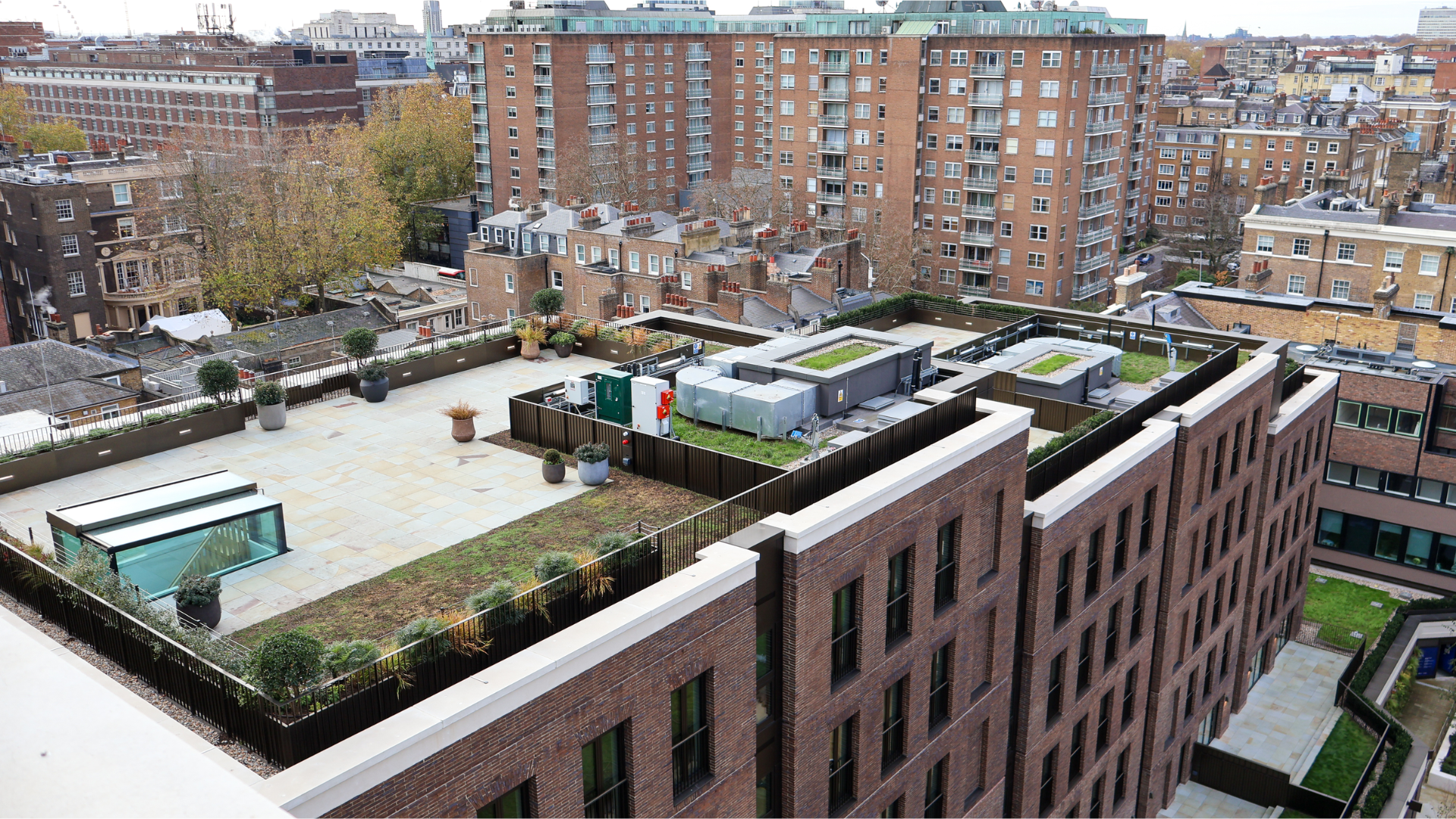
As the specialist roofing subcontractor appointed by Laing O’Rourke, we delivered a diverse and technically challenging roofing package to terraces, plant decks, and roof areas across multiple blocks. Our works encompassed buried hot-applied waterproofing and insulation systems, tapered Foamglas, BEMO standing seam roofing, Trimo composite wall panels, built-up roofing to M&E overruns, green roofing, and paving.
Modern methods of construction and DfMA were used for efficiency, quality, and precision. Each zone required bespoke detailing, particularly at pedestrian access, green roofs, and BMU tracks. Lightweight materials, precut slabs, and off-site fabrication facilitated safe and efficient installation.

Coordination with the main contractor, architects, consultants, local community, and residents was critical, integrating multiple trades in a high-profile, occupied development. Safety, access, and environmental management were key considerations, especially in Block Y near residential units and Gloucester Place. Through careful planning and an experienced, skilled workforce, we delivered roof solutions that met project demands.

  • Location in Marylebone required sensitive management of noise, access, and material handling, especially near Gloucester Place and residential properties.
  • Installation of tapered FoamGlas insulation across inverted and warm roof zones was complex, with bespoke cutting for curved geometries and alignment with BMU tracks.
  • BEMO standing seam roof and Trimo panels on Block Y required specialist expertise due to confined working areas and height constraints; operatives worked on harnesses near residential windows.
  • Long lead times and bespoke cutting for Scoutmoor paving required off-site planning and precise adjustment during installation.
  • High-rise logistics demanded careful planning for material lifts and distribution, with tight site access and limited crane utility.
  • All roof interfaces, including green and biodiverse roofs, needed careful integration with waterproofing membranes and drainage systems.
  • Close collaboration and communication with Laing O’Rourke and other teams enabled proactive problem-solving from early project stages.

  • Installation of Bemo standing seam roof and Trimo panels with specialist, NVQ4-accredited operatives, with all health and safety certifications.
  • Scoutmoor paving on Levels 8 and 10 was pre-cut off-site and installed with precision around curved BMU tracks.
  • Biodiverse green roofs installed across terraces, supporting biodiversity and sustainability.
  • Consistent, directly employed workforce ensured quality and adherence to procedures and safety standards.
  • Regular monitoring by Radmat Site Quality Technicians and collaboration with Radmat for lifting, equipment placement, and quality control.
  • Proactive problem-solving with design team to address challenges and maintain continuity.
  • Safety innovations shared industry-wide (e.g., material storage under nets, pictorial RAMS for diverse languages, enhanced banksman roles).
  • Aesthetic achievement in blending green roofs, high-end natural stone paving, and contemporary roofing and cladding systems.