




11 Belgrave Road
BMI Icopal Parabit Solo Hot Melt Compound
2,000 m²
MAC Roofing & Contracting Ltd
11 Belgrave Road is a landmark low-carbon redevelopment in central London, transforming a retained 1950s building into 150,000 sq. ft of next-generation, net-zero workplace. From inception, the project was driven by a rigorous sustainability agenda, prioritising embodied carbon reduction, energy efficiency, responsible material selection and long-term environmental performance. By retaining around 35% of the existing structure, the scheme significantly reduced demolition waste and achieved lower embodied carbon than a full rebuild, extending the building’s functional life by at least another decade.
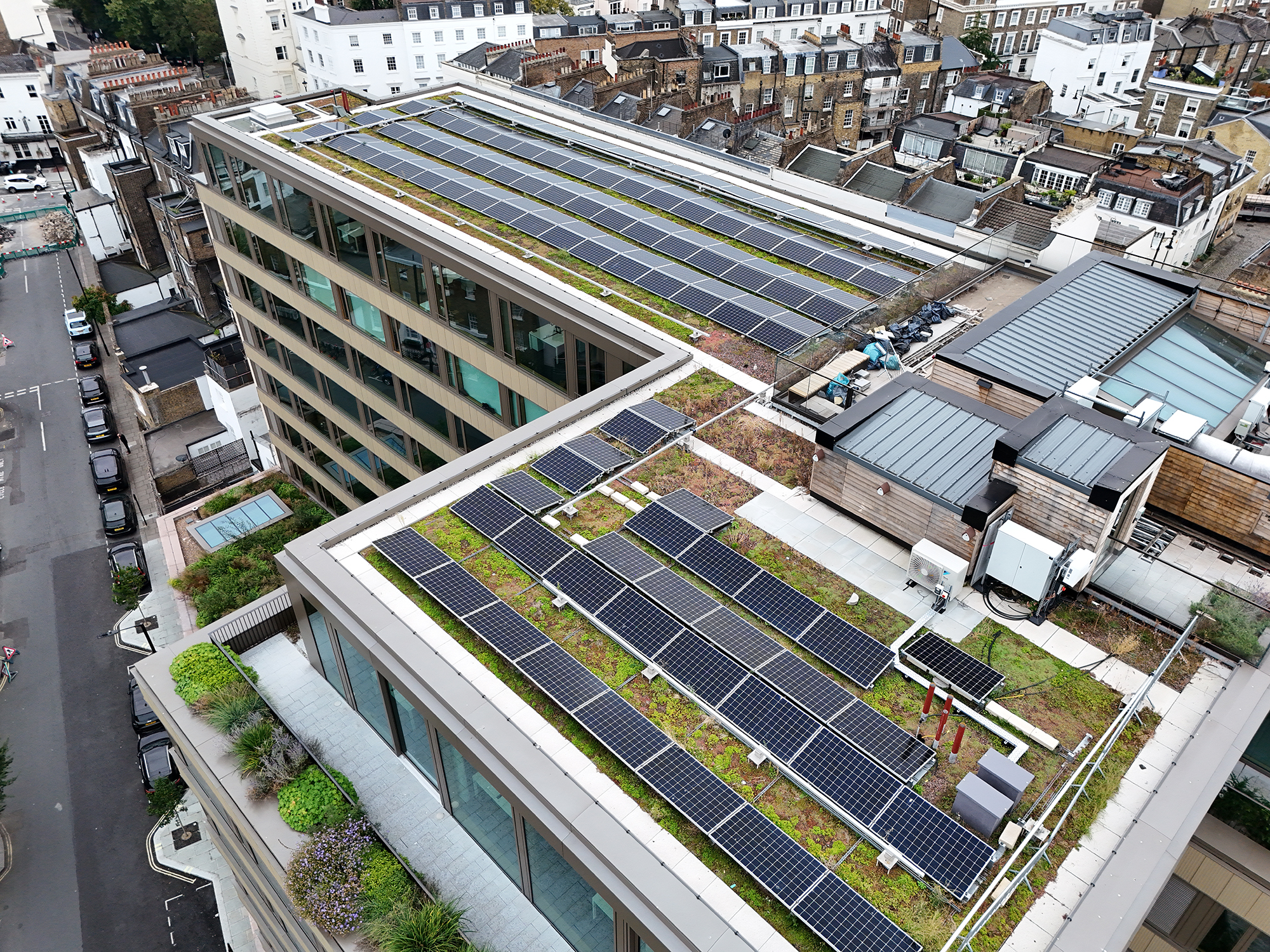
The development also delivers substantial gains in operational sustainability. 11 Belgrave Road is a fully electric building powered by high-efficiency air source heat pumps, with no reliance on fossil fuels. The installation of 320m² of photovoltaic panels contributes directly to on-site renewable power generation and supports a 35% reduction in CO₂ emissions. Passive cooling strategies, exposed soffits, natural ventilation and smart energy-monitoring systems further reduce operational energy demand and promote data-led energy management.
The external landscaped elements are equally environmentally informed, with over 10,000 sq. ft of gardens, terraces, sedum roofs and green planting enhancing biodiversity, intercepting rainfall, supporting urban ecology and reconnecting occupants with natural environments. Combined with Sustainable Urban Drainage Systems (SUDS), these spaces contribute to improved air quality and reduced urban heat gain.
The sustainability performance of the project has been independently recognised, achieving a BREEAM Outstanding rating, WELL Platinum Pre-Certification, WIRESCORE Platinum, SMARTSCORE Platinum and becoming the UK’s first building to secure a design-reviewed NABERS UK 5.5 Star target rating – placing it at the forefront of sustainable commercial development in Britain.
The client’s requirement for an all-electric, net-zero workplace set a clear benchmark from the outset, driving every technical and operational decision across the roofing package. Working with a highly sensitive retained structure created both opportunity and challenge – the preservation of the existing building fabric reduced embodied carbon, but also necessitated innovative waterproofing sequencing and precise installation methods to ensure the protection of exposed CLT soffits during construction.
The logistical limitations of an inner-city site adjacent to Victoria Station required extremely efficient material movement, scheduling and usage, contributing to waste minimisation and reduced transport emissions. The sustainability goals also extended to the wider project ecosystem: selecting responsibly sourced materials, partnering only with suppliers meeting strict compliance standards, supporting local labour and graduate integration, and advancing biodiversity through green roof infrastructure.
This project represents a compelling example of how sustainability, when integrated into design intent, supply chain methodology and day-to-day site practice, can deliver measurable environmental benefits that extend far beyond regulatory compliance.