




76 Southbank
Radmat Permaquick PQ6100
11,000 m²
Lindner Prater Ltd
Winner
LRWA Awards 2026 - Sustainability Project of the Year
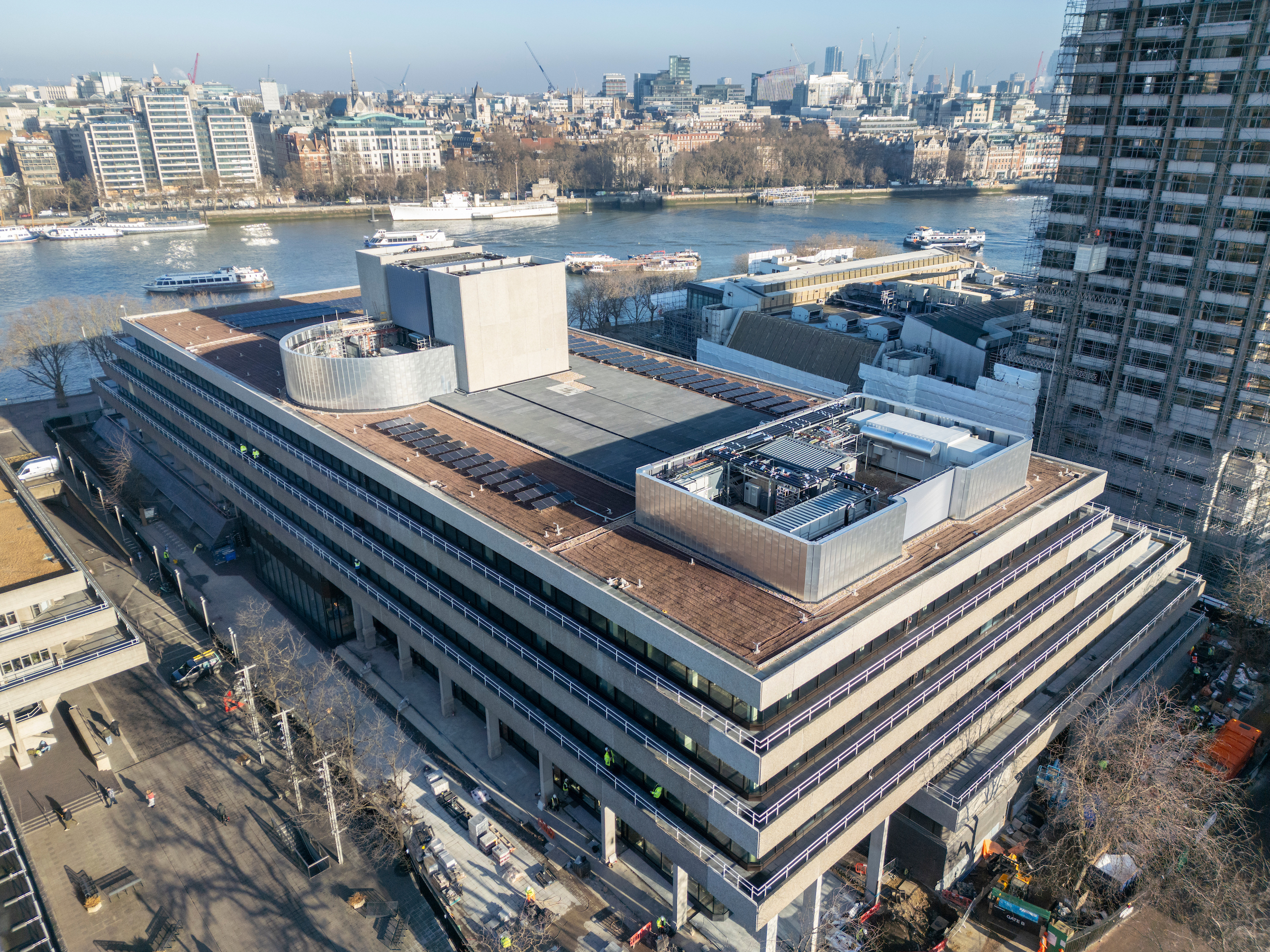
76 Southbank is a pioneering Grade II-listed refurbishment located on the banks of the Thames, featured on the front cover of Building magazine. The project, led by Allford Hall Monaghan Morris (AHMM), demonstrates a sensitive yet bold approach to transforming a Brutalist icon for the 21st century. Originally designed by Denys Lasdun in 1983 as the IBM building, the redevelopment has converted the structure into 11,000 m² of flexible, sustainable office space, incorporating 4,400 m² of terraces, podiums, and landscaped areas while respecting the building’s heritage.
Sustainability is central to the project. Over 80% of the original concrete frame was retained, reducing embodied carbon of <435 kg CO₂e/m² and aligning with LETI/RIBA 2030 low upfront carbon ambitions. The building operates entirely on renewable energy via air-source heat pumps and a biosolar roof, targeting 5-star NABERS, BREEAM Outstanding, and EPC A. A biodiversity net gain of over 200% compared to the previous structure has been achieved through landscaped terraces, tree planting, and the integration of biodiverse roof systems.
76 Southbank is also a cultural and commercial hub, offering six galleries and theatres, 50 bars and restaurants, and attracting approximately 30 million visitors annually.
As a specialist subcontractor, we were appointed by Multiplex to deliver a comprehensive, multi-disciplinary, biosolar roofing and package. Our scope encompassed the full and complex buried hot-applied waterproofing works using Radmat’s PermaQuik system, which provides a fully bonded, monolithic membrane ensuring superior durability and watertight performance with a BBA-certified, 40-year design life and BES 6001 responsible sourcing certification. Advanced insulation systems, including high-performance XPS were integrated to meet stringent thermal targets and support the building’s all-electric operation.
The blue roof system was incorporated to manage stormwater retention for up to 25 hours, forming a key component of the SuDS strategy, while biodiverse roofs and landscaped terraces improved ecological performance and urban amenity.
76 Southbank presented a unique combination of heritage sensitivity, sustainability targets, and complex multi-level roofing, requiring a highly coordinated approach to deliver both functional and visually striking spaces. The Grade II-listed structure, a landmark Brutalist building on the South Bank, demanded careful preservation of its architectural integrity, particularly sightlines to St. Paul’s Cathedral, while integrating modern, energy-efficient solutions such as biosolar PV panels, biodiverse green roofs, and a blue roof water management system.
Challenges included: