


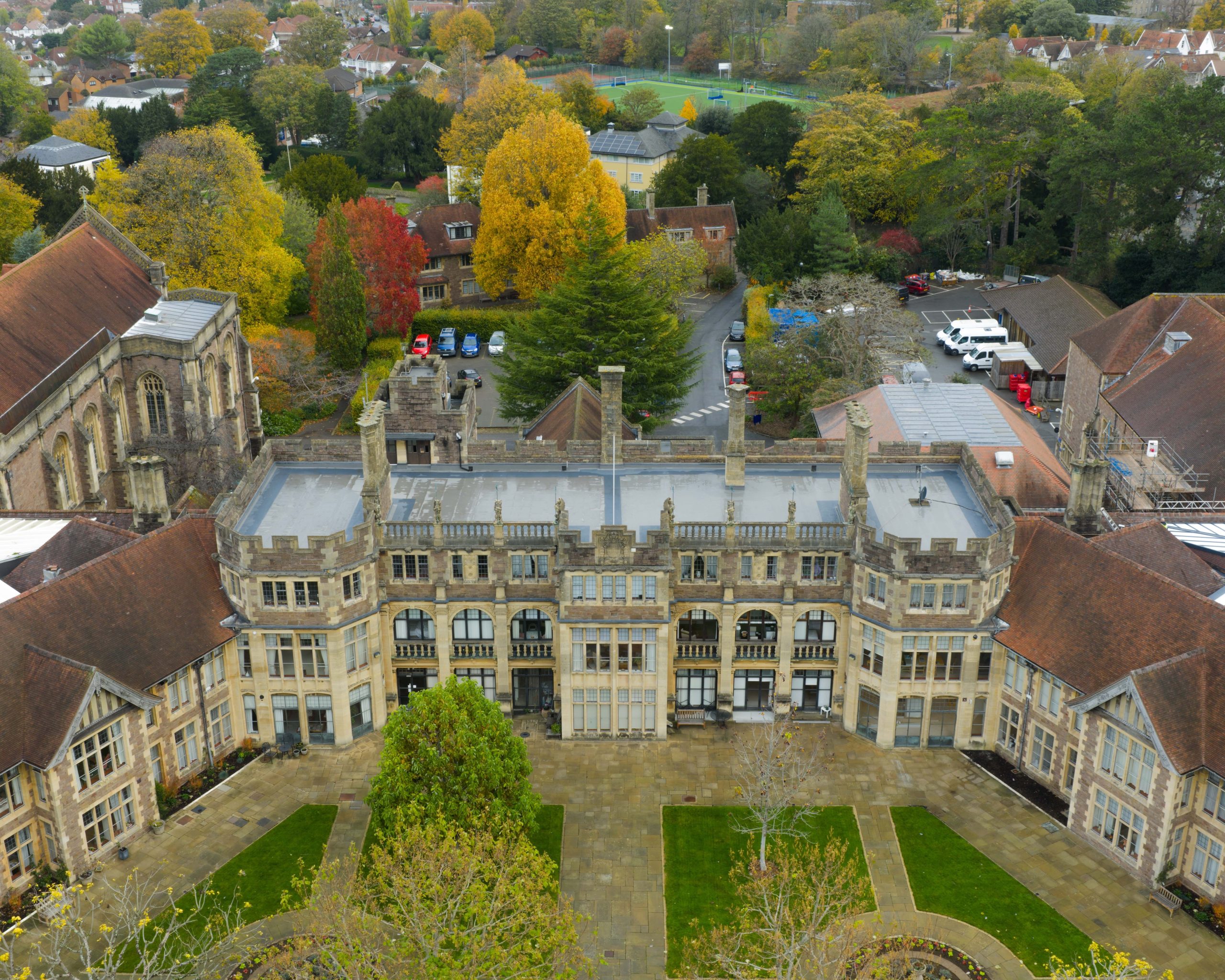


Oatley House
Ultra-low-odour Polyroof Evolve System
650 m²
MLG UK Ltd
Situated in the heart of the Cote Lane Retirement Village, Oatley House is an active residential care facility and Grade II listed building offering residents a touch of old-world grandeur across its 70 apartments. Having originally been built in 1925, a sympathetic, two-phase refurbishment was required to the roof over the main house and reception; both of which were aged and failing. Despite localised repairs to the existing asphalt roof with chippings, water ingress remained an issue, necessitating a long-term, robust solution to provide protection to the roof areas and the building’s inhabitants.
Core test samples taken by the Polyroof Technical Team revealed a build-up comprising of felt waterproofing, asphalt, 40mm insulation, sheathing felt, and a concrete deck. Due to the building’s Grade II listed status, the roof presented numerous examples of historical brickwork and stonework, therefore, it was crucial that these were carefully detailed to not disrupt any heritage features. Additionally, the project necessitated the specification of a fully cold-applied liquid to avoid hot works and open flame, which would present risk of safety to the building’s residents.
Furthermore, the ultra-low-odour, liquid-applied Protec Evolve System was deemed the most suitable solution for the application, not least because of the membrane’s ability to encapsulate historical detailing, but also to avoid disruption to the residents living in the building below. The client wanted to prevent unnecessary disruption for the buildings inhabitants so ideally wanted a solution that did not involve stripping the roof. As the existing build up was core tested and found to be in a suitable condition, it was decided to retain the existing layers and incorporate 25mm of Polyroof Tissue Thermal Insulation to act as a recovery layer, which normalised the substrate prior to the application of the new waterproofing membrane. This also solved the challenge of having to carry all the gravel off the roof, therefore, keeping noise disruption for residents to a minimum. By carefully selecting the right recovery layer this enabled the solution to be found without compromising the surrounding detailing.
The works carried out by MLG UK Ltd resulted in a robust, durable refurbishment of the roof at Oatley House, futureproofing the building for many years to come. Residents at the retirement home can now continue to live in the peaceful and tranquil environment offered by the facility, with the building’s refreshed and revitalised roof having breathed new life into this historic structure.
The roof refurbishment at Oatley House presented significant complexities for MLG UK, which required them to work strategically to ensure the roof was fully waterproofed to the Client’s specification. When faced with the challenge of completing the waterproofing works whilst residents inhabited the retirement home, MLG UK knew that the specified system would need to cause as little disruption as possible. In this vein, the Client opted for an overlay as opposed to a full strip of the existing build up. Additionally, due to the building being occupied throughout the project, the waterproofing system needed to be low odour to ensure the residents were not disrupted.
The contractors selected the trusted Protec Evolve System due to its ultra-low-odour formulation. Powered by an advanced flexible hybrid polyester methacrylate formulation (PeMA), this makes Protec Evolve ideally suited to installation within sensitive environments. The versatility of the system enables its seamless adhesion to a wide range of surfaces, including felt and asphalt, along with being able to encapsulate complex roof details both quickly and effectively.
By incorporating 25mm of Polyroof Tissue-Therm Insulation, this enabled MLG UK to fully prepare the surface for application of the Protec Evolve membrane. The addition of a foil-faced carrier layer over the 25mm recovery board helped the contractors to provide temporary weatherproof protection to keep the insulation boards dry.
Upon conducting the survey at Oatley House, a variety of complex details across the multiple roof areas were discovered, which further reinforced the suitability of installing a liquid-applied membrane, as opposed to other materials. Perimeter design of the building included a crenelated parapet in soft, porous sandstone. Due to the Grade II listed nature of the building, this prohibited full encapsulation of the parapets, necessitating the inclusion of a timber upstand detail to the entire perimeter of the roof. This offset, sloping detail over undulating stone, was hand built by Carpenters and finished with a new lead flashing after encapsulation with the carrier layer and Protec Evolve resin. This presented additional difficulty due to the awkward size of the stone parapets, requiring the inclusion of threaded rods to install the timber upstands before they were boarded. The versatility of the liquid membrane, however, lent itself well to these complex details, being able to work in conjunction with the restrictions of waterproofing a Grade II listed property whilst still achieving a high performance, long-lasting watertight finish.
MLG UK’s unwavering dedication and skill in the application of liquid waterproofing systems was matched by their strategic problem-solving focus, to ensure that the refurbishment of Oatley House was completed on time and to specification. Their dedication and tenacity shone through with their solutions-based approach to tackling the difficulties in waterproofing a Grade II listed building. For example, by incorporating the hand-built timber upstands to enable encapsulation of the historic parapet details.
The contractors were faced with the adversity of extreme weather conditions during the application of the new waterproofing system, encountering both heavy rainfall and excessive heat, synonymous with the unpredictability of British summertime. This prevented the contractors from undertaking full-day application, therefore, requiring them to operate across split shifts to stay on schedule, but more importantly to adopt a system that could accommodate these constraints. To combat this, they chose to install the Protec Evolve System, the advanced technology of which means the system has the flexibility to be applied around periods of poor weather. Due to its RapidCure capabilities, Protec Evolve cures in as little as 30 minutes, which enabled MLG UK to apply the resin around periods of rain. The foil-faced carrier layer also aided their efforts by providing temporary water resistance, protecting the build-up from ingress whilst the refurbishment works were carried out. Additionally, during times where the outdoor temperature was high, summer inhibitors were incorporated into the resin to slow down the cure time of the system, which extended the pot life of the resin.